
ENID FARBER
“The Lady Behind the Lens”

June 2026
from the upcoming July issue of Cadence Magazine
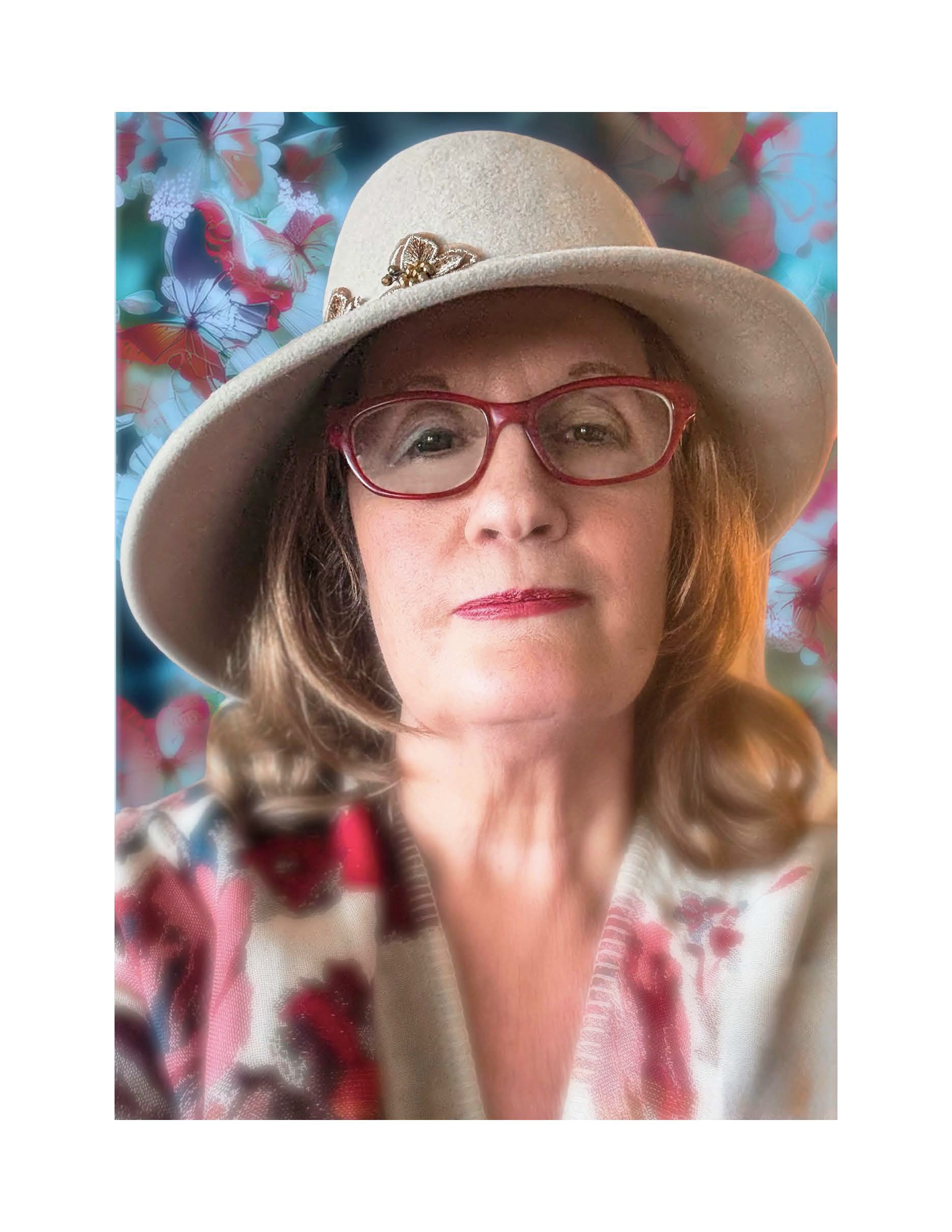
No two people see the same thing the same way, nor do any of us see the same thing the same way twice, it’s not a human ability because vision is a dynamic reconstruction, not a static recording. Our brains predict what we see based on past experiences, context, and memory, and constantly adjusts its interpretation—meaning no two moments of perception are ever identically processed. We don’t even see ourselves the same as others see us. Ever walk past a store window and see your reflection in the glass and don’t recognize yourself? That’s what I’m talking about, sight vs perception. So, what you see through the camera’s lens before taking a picture is called the sight picture, perception is understanding the meaning of the picture and vision refers to your creative, artistic goal—the underlying concept of what you want the photograph to ultimately look like. So beyond technical expertise what stands out to me as being the determining factor in what makes a great photographer is “Artistic Vision” and that’s what Enid Farber possesses. She has the “Eye.” She doesn’t just see what’s in front of her, she interprets it, she finds its emotional center and captures its feeling. Through her masterful understanding of composition and the use of light, color, design, structure, form, space, movement/rhythm, her photographs speak volumes, they tell a story, they sing a song, they are visual compositions.
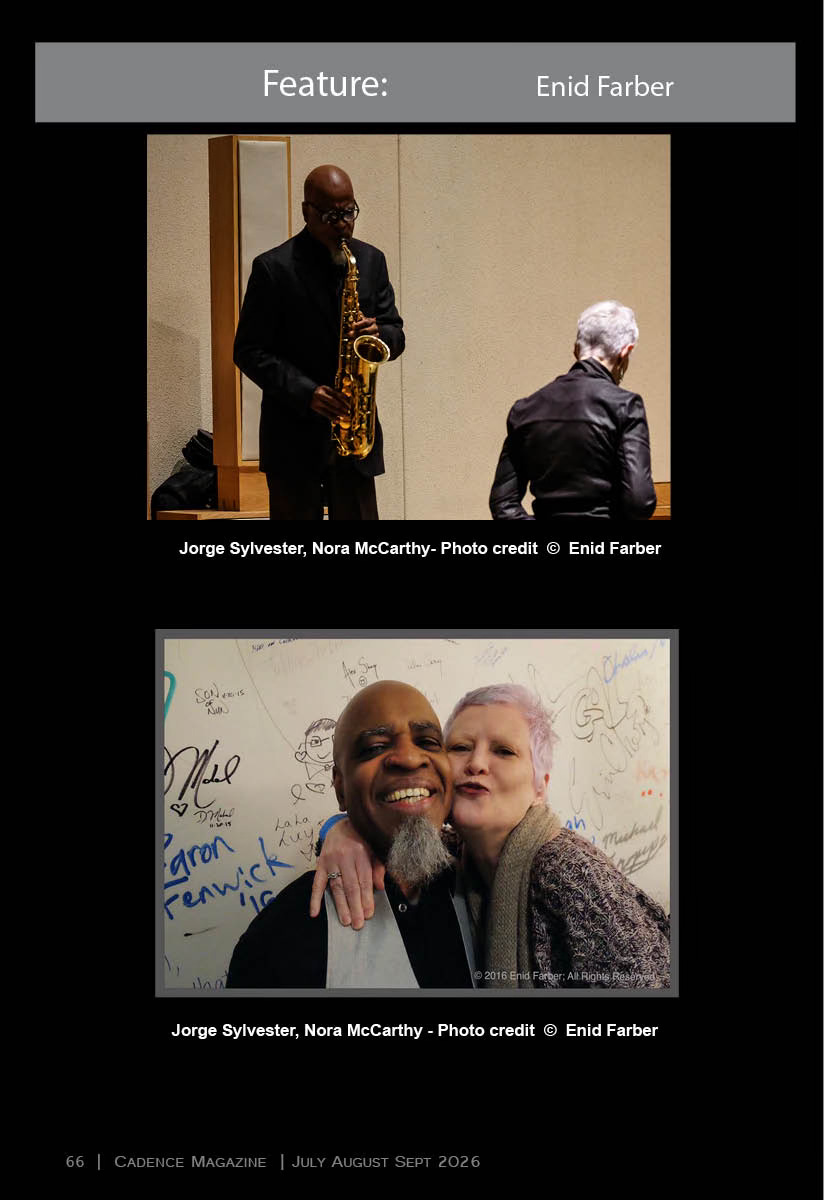
I met Enid Farber in 2016 at the New School in Greenwich Village, NYC on the night trombonist Craig Harris’ group Breathe was performing; my husband and musical partner, alto-saxophonist, Jorge Sylvester was in the group. Enid was there taking photographs of the event. After the performance everyone was socializing and walking about the space. Enid was in her full element, documenting, as only she can do, in the moment, the memories of the evening. As Jorge and I were walking around, arm in arm, we stopped in front of a wall covered in signatures and cute little drawings. Enid saw us and seized the moment to snap an impromptu photo of us in a loving cheek-to-cheek embrace. When the night was over, we exchanged our contact information so she could send the photo to me. That photo was and remains one of my favorite photographs. A heartwarming memory, that documented an incredible night of music, and our love story. Everything about that photo is perfect, the mood, the moment, the lighting, the composition, the love; she really homed in on the beauty of it. She saw us and that photo speaks loudly of who Enid Farber is at her core, an artist of the highest caliber and worth who understands the reciprocity of art. In addition, her generosity of spirit and her big heart to then give us something of such incalculable value, speaks to her humanity and humility.
So, who is Enid Farber? Well, I can say from this true space and my experience having been photographed countless times by many photographers over my lifetime as a model, actor, and jazz vocalist, Enid is a blessed and gifted photographic artist who possesses the ability to see past the image and the social constructs of our world to convey that which is not seen but is felt, such as emotions and moods, the heart as well as the spirit, the soul, and the being of her subject matter. The scope of her art transcends the ordinary physical realities of life. This is a gift that only a visionary possesses. While her depth of perception and subject matter is broad, this article focuses on her brilliant work photographing musicians within the Jazz and World Music medium, all while navigating through a male dominated biased business since 1979.
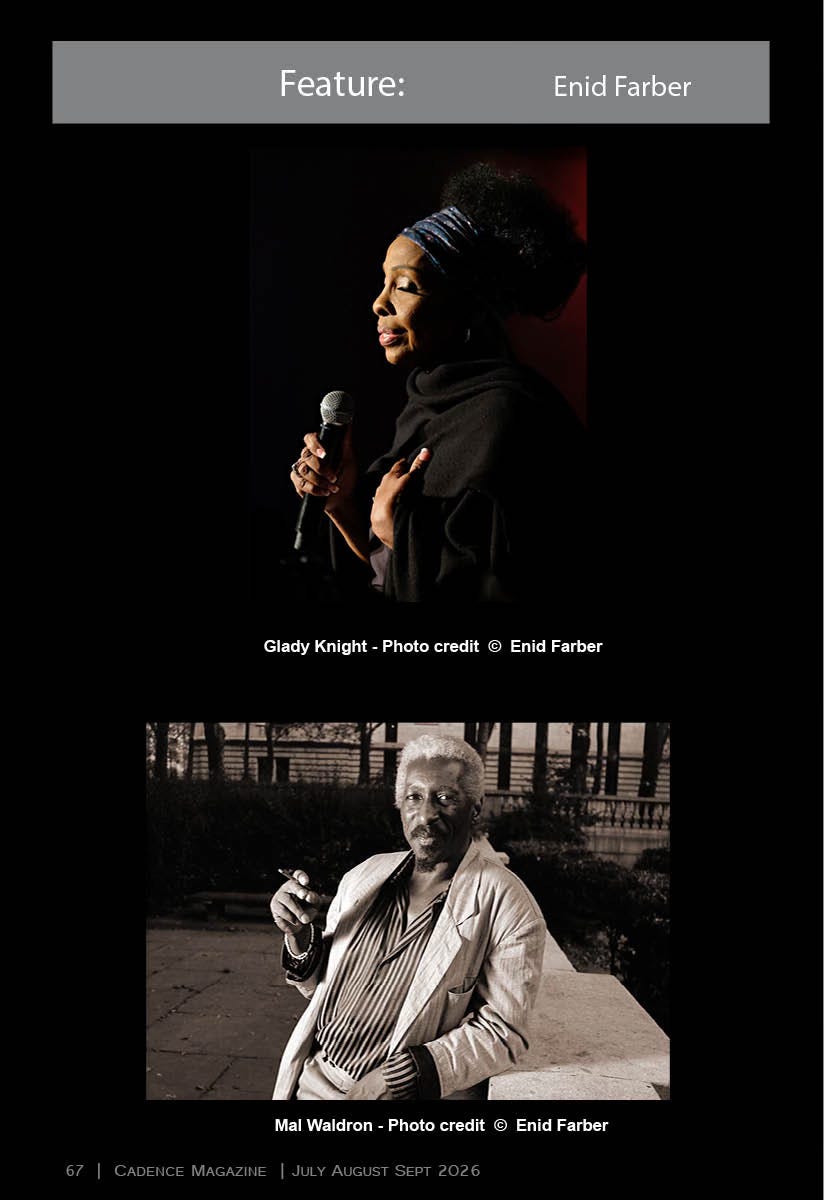
Enid Farber began her career in Atlanta and made her way to New York City to focus primarily on the evolving history of the Jazz and World Music scene for publications and record companies. One of the main reasons I believe she stands out among so many is that she is authentic, in other words, “the real deal.” She is self-taught primarily. A natural.
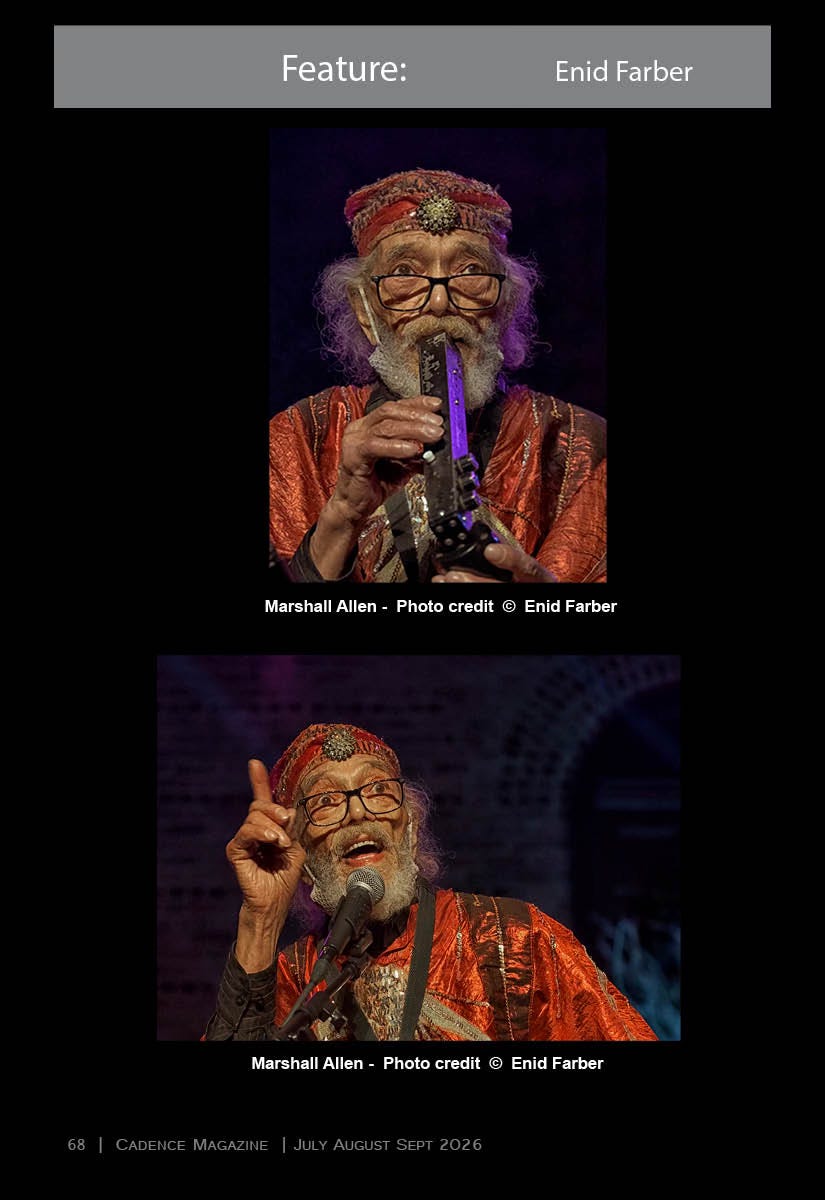
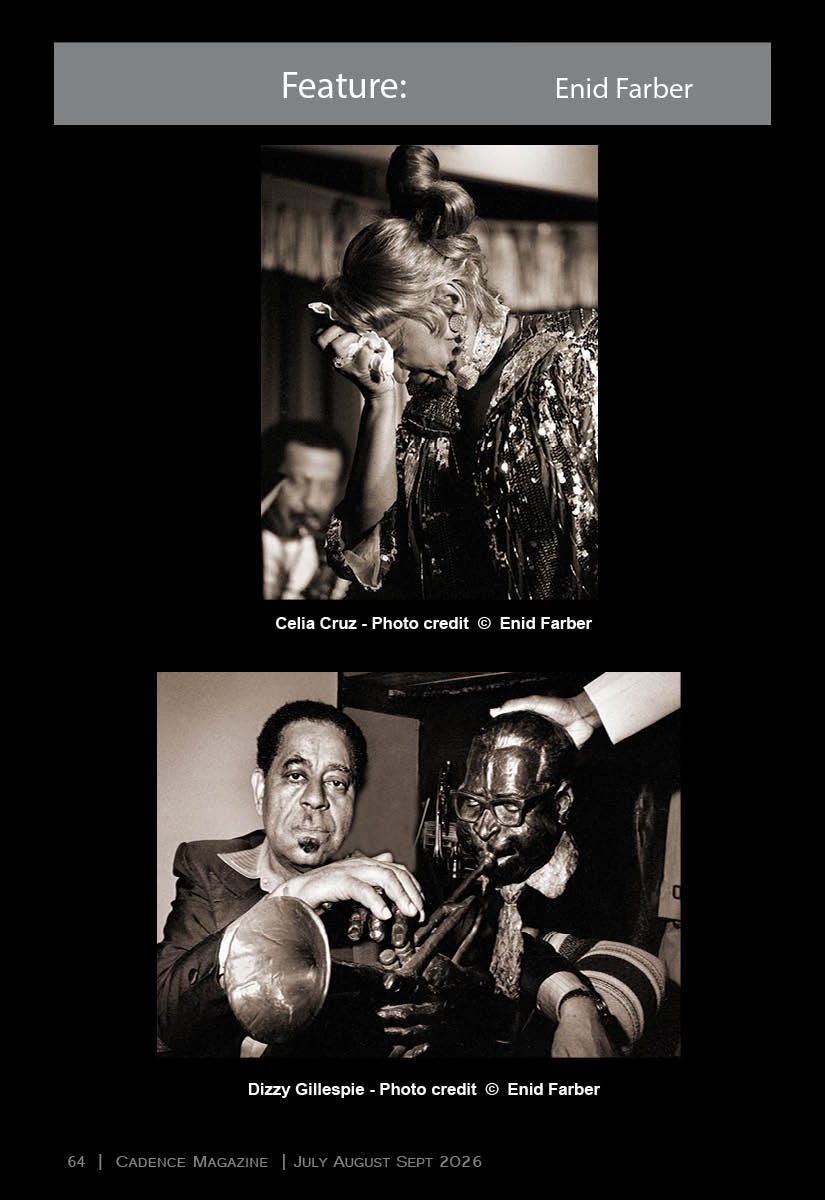
Highly expressive as well as conceptual, her work resonates on a personal level evoking an emotional connection with the viewer. Her impeccable multi-disciplinary approach to her photographic creativity employs the kinds of elements found in other art forms which explains how she translates the music she hears through her photographs - yes, she photographs the sound of the music, which also makes her a visual musician as well as an aural photographer, and for those who think you can’t see music, you can, and Enid definitely can. Artists/painters like: Wassily Kandinsky, whose abstract art created visual equivalents of musical compositions and Paul Klee, Matisse, Jackson Pollock, known as the “jazz painter”, to name but a few who captured music in their visual art.
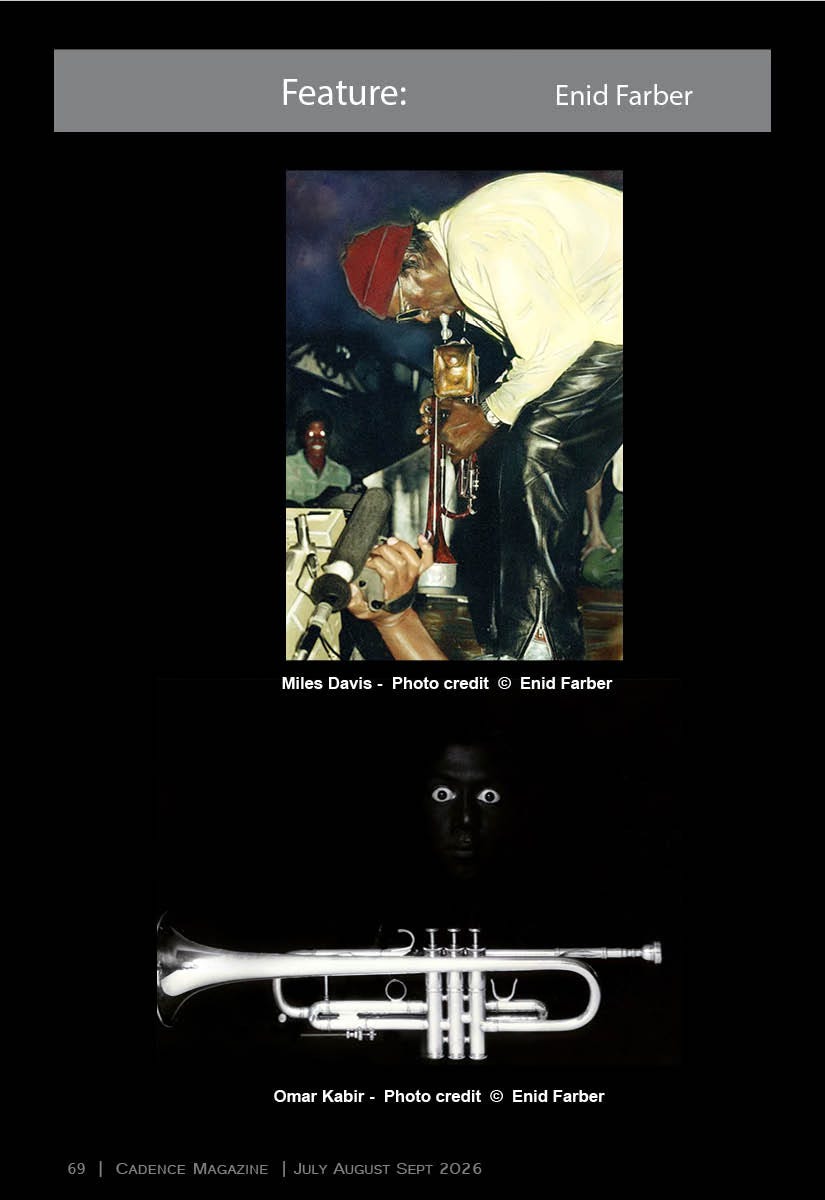
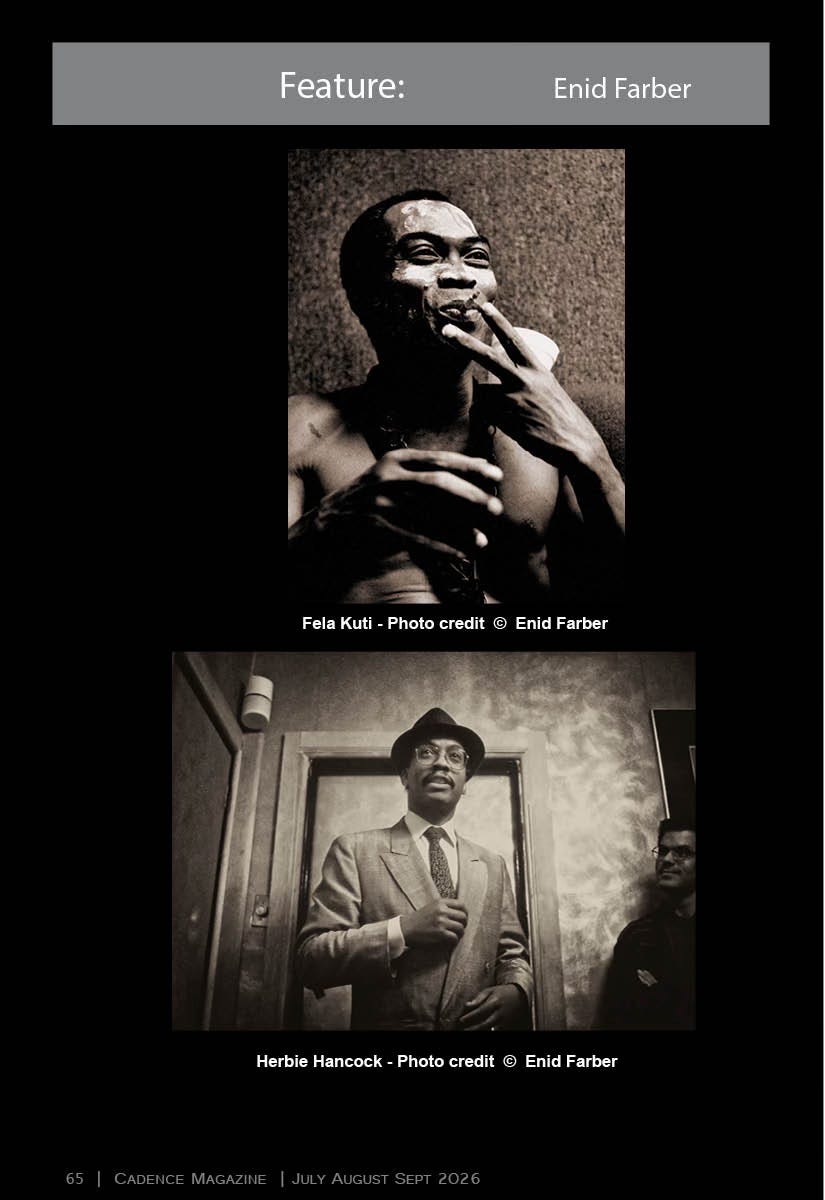
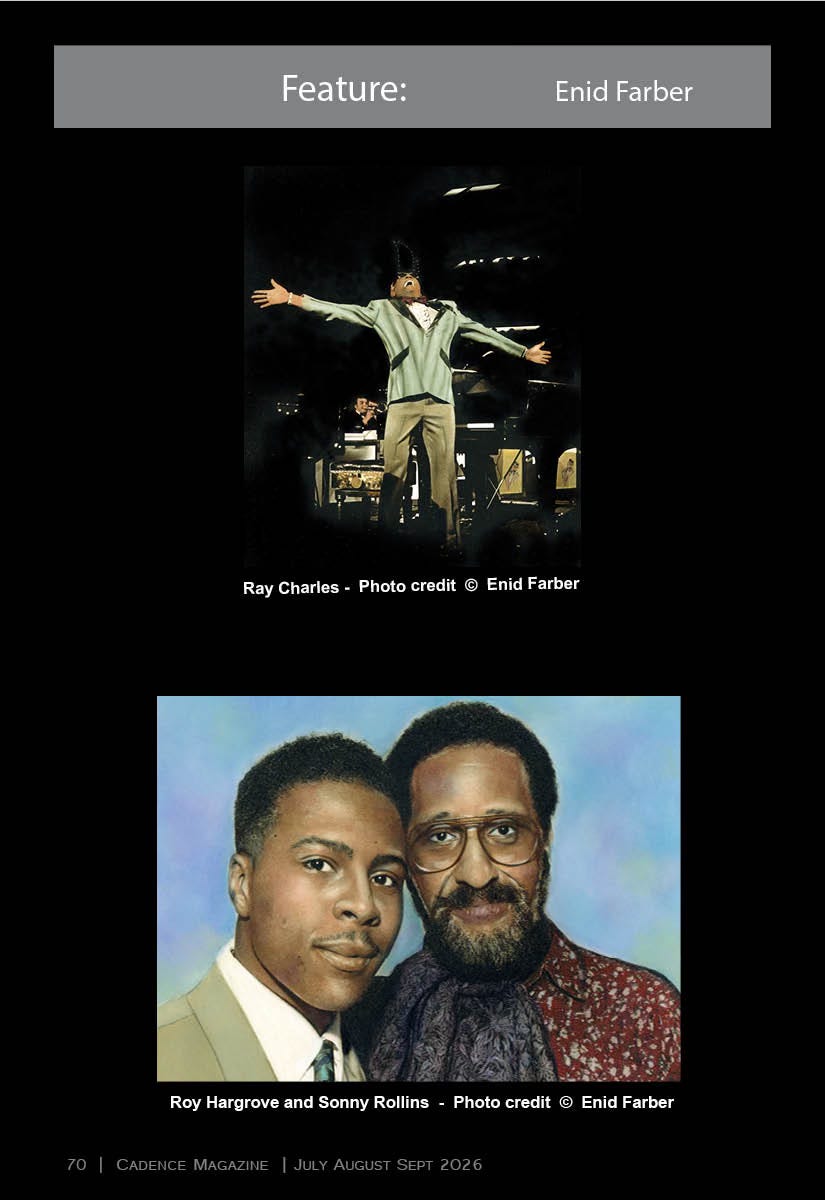
What is Enid’s style or her strength? Photojournalism? Portrait photography? Avant-garde? Landscape? Enid’s work cannot be pigeon-holed. Her photographs of famous well-known musicians at various stages of their careers and taken in various settings are stunning works of art - second to none. She sees past and through their “image” and their “fame” to who they are at their core, their truth, their soul, their story, their beauty and complexity, their fragility, their dedication, their genius - she finds it because she sees them.
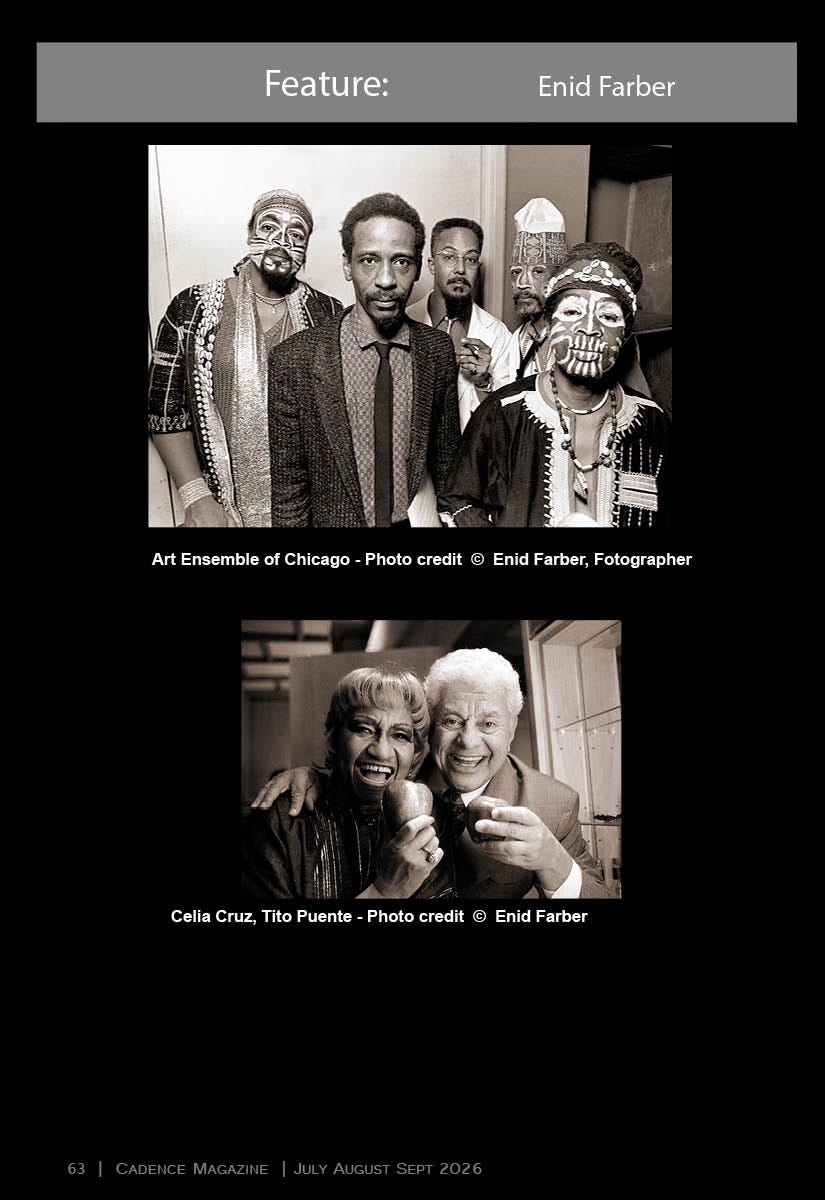
Please check out her website, https://www.enidfarber.com to take in the full scope of her amazing collection of photographs. My personal favorites include Fela Kuti, Herbie Hancock, Art Ensemble oChicago, Marshall Allen, Omar Kabir, Matthew Shipp, Ray Charles, Celia Cruz, Gladys Knight, and if I don’t stop, I’d have to name them all because each one is distinctly special. And, those are just the musicians, she also has Fine Art Photos of Landscapes, (”Susan’s Window” is a favorite) as well as Electrical Light Abstracts that are so wonderful and magical. You can also find Enid’s work on Instagram - @farberfoto and her other page https://www.instagram.com/enidsothereye/
Ms. Farber’s world is filled with beauty. I found a similarity between her work and the music of Thelonious Monk because his compositional approach, like her photographs, explore the concept of finding beauty in unconventional, imperfect, or asymmetrical things and surroundings. And Enid’s photographs do the same, by capturing the emotional beauty in unusual and unexpected settings, in their “imperfection” according to conventional standards. And like Monk who found harmony in dissonance in his compositional approach, Farber uses the tempo and the rhythm of the moment to her advantage by stepping into it and finding the sweet space, like a musician who finds the sweet notes while improvising.
So as one thought typically leads to another, the time-lapsed synchronicities between her work and Monk’s compositions, don’t end there because I believe everything is connected in some way, shape or form. Monk’s beautiful waltz entitled, “Pannonica”, which means, moth/butterfly hence it’s alternative titles: “Pannonica My Butterfly” and “Little Butterfly” which came later when Jon Hendricks wrote lyrics for it. Monk dedicated his composition to his dear platonic friend and companion, Baroness Pannonica “Nica” de Koenigswarter, the “Jazz Baroness”, to honor her for her love and support of him and other modern jazz musicians. Similarly, Enid’s dedication, love and support of Jazz and World Music is expressed through her photography which is an irrefutable testament to the immeasurable creative, cultural, social, and political impact that Jazz has made on the world’s music.
And just like I know that all our lives are woven together by a grander scheme, Enid’s spirit guide just happens to be the butterfly, and she is often seen wearing butterfly jewelry, or accessories with butterfly motifs. The symbol of the butterfly represents knowledge, transformation, creative energy, wisdom and inspiration. It provides a way for artists to channel their talents and express themselves in a way that their work will evoke a sense of wonder in those who behold it.
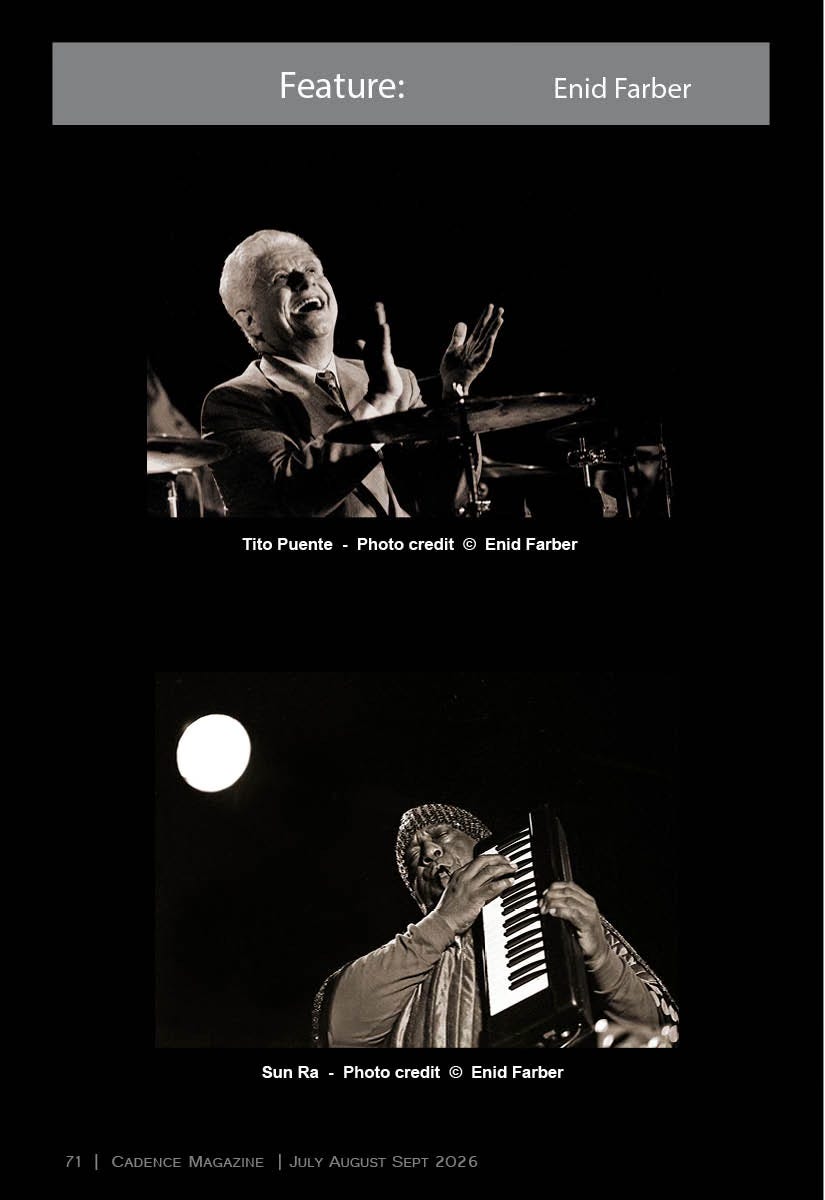
The pursuit of an inner truth is found throughout Enid Farber’s work. The comparison of the butterfly’s spiritual meaning to Enid Farber’s photographic style is uncanny because they both connect Enid Farber’s soul to her work which has been featured in Jazztimes Magazine as a Master of Jazz Photography and in a 12-page photo essay entitled, “Legends Who Have Passed Thru My Lens” based on an exhibition of her photos. She received an honorable mention in the New York Times and was the recipient of the Jazz Journalists Association’s Excellence in Jazz Photography award in 2002, as well as the award for Best Photo of the Year.
In addition, some of Farber’s classic jazz images were selected for noted filmmaker Ken Burns’ historic 20-hour documentary on jazz which was aired on PBS in 2001. Burns also acknowledged Farber as the sole female amongst 14 legendary male photographers who were considered extraordinary and the finest jazz art photographers in the country. These are but a few of her many accomplishments which include Published Work in Print for magazines, newspapers, and books; CD’s & Other Media; Exhibitions - both solo and group; and an illustrious client list. Most recently, her work was featured in Women-in-Jazz-Media-Magazine-March-2026.
Enid is known to show up at an event when you least expect it. Over the years, at various performances, I’ve looked out into the audience and happily seen her, donning one of her beautiful hats and sporting her lovely vintage jewelry, taking in the moment, perusing the space for creative possibilities or conversely sitting silently and just being in the moment assessing the energy of the room, sitting into it as it were, before she begins to create. It’s always great to see her but even greater to be seen by her. She doesn’t draw attention to herself, but her presence reaches out like a gesture of love and support signifying something of meaning, of value, something important is about to take place and she is a witness, a time capsule. When I see her in the audience, it feels like sanctification, I know the spirits are watching.
So again, I pose the question, who is Enid Farber? What motivates her? How did she arrive at the place she earned, what tuned her eye to see beyond and through the wall of created personality?
She too is the music that she feels so intimately; that she captures so exquisitely. The music that guides her ability to hit the shutter key at precisely the right moment. Like any other creative field that lends itself to many purposes, photography is no different. There are at least 50 distinct genres and niches of photography in the world and around 300,000 professional photographers and approximately 50 million to 75 million serious hobbyists and semi-professionals worldwide, it is quite difficult to pinpoint the exact number. Let that sink in for a minute then think about the kind of talent, dedication, strength, expertise and love it takes for a photographer’s work to be acknowledged and awarded for its excellence in such a competitive field as photography; or for it to receive an honorable mention, how about over five illustrious awards and honors from 1983-2002, multiple presentations in magazines, newspapers, books, and other media, and well over twenty exhibitions both solo and group, to list just a few of Enid’s accomplishments. Hard to fathom how difficult meeting and surpassing that kind of challenge is. There are those photographers, and Enid is one, who have the insight, the intuition, the God given gift, the “eye” to see and capture the smallest inconspicuous detail of the greater whole in their chosen genre that opens the portal to the masterpiece that is life. Their art serves the highest purpose.
Creativity is a fundamental aspect of human nature, the drive to create is universal. As human beings we are all basically looking for our true selves, our voice. We are looking for answers to the mystery of life. And, in every way shape and form—we are looking for love, acceptance, approval, permission, validation, acknowledgment, admiration, respect, purpose, and ultimately eternity, life everlasting—immortality and ultimately peace. Enid Farber’s empathetic photographs represent humanity, the journey, the soul, the psyche, and a divine connection to the spiritual realm which are all reflected in the tender intimacy of her photos.
Enid ‘s photos are complete with all the emotional attachments they exude and the memories of others they embody while embracing nuances of realism, the avant-garde, and the abstract. Enid is tuned into the soul of the matter, in the moment, she sees it all without limits or false perceptions. She is a master at what she does, and her photographs are works of art. Her studio is the world itself.
What then defines Enid Farber’s art? It’s FEELING and that feeling is LOVE.
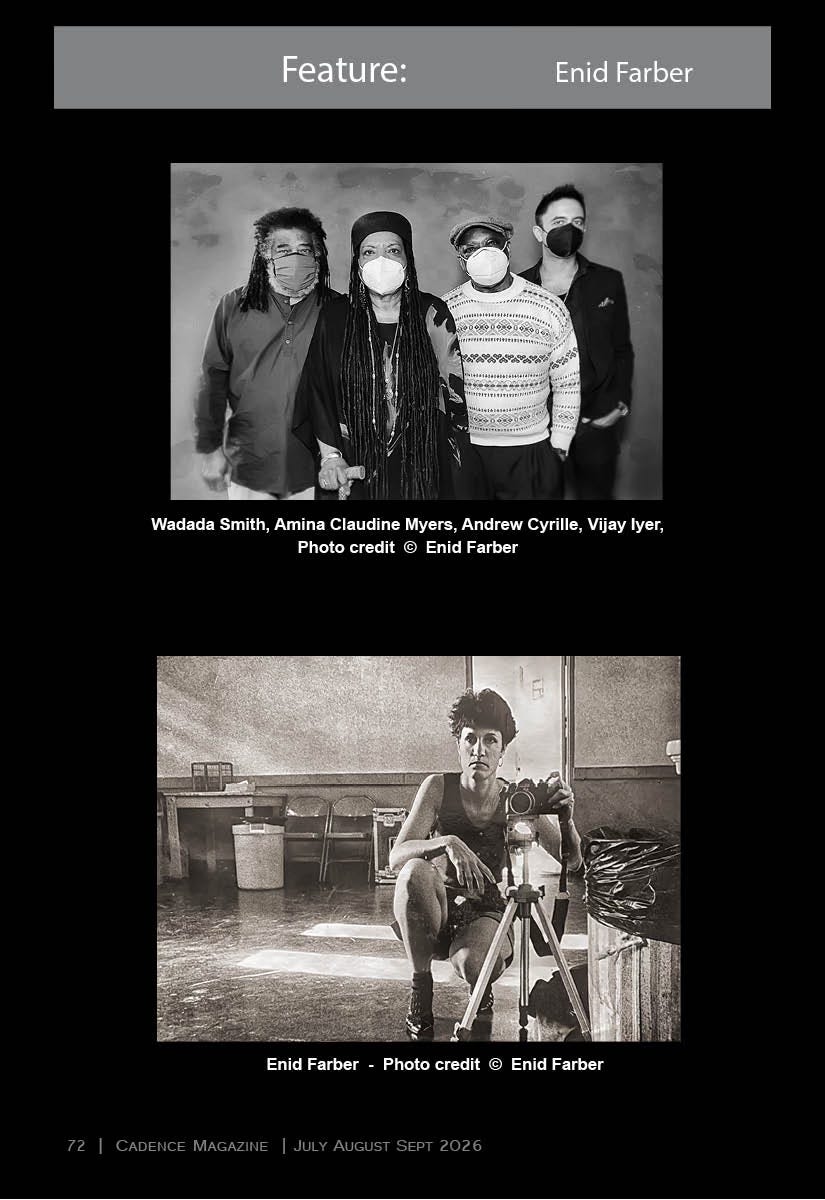
She sells cards of her photographs on her website. I’ve bought from her a few times, and music fans, you want some of her cards, trust me. Thanks for this enjoyable profile.